




















Montessori at Home: 6 Practical Ways to Help Children Learn Through Everyday Play

Children are naturally curious. They want to touch, explore, climb, build, and try things for themselves. Sometimes, the simplest everyday activities become their most meaningful learning experiences.
Montessori at home is really about creating an environment where children can explore freely, develop independence, and learn through practical experiences.
Developed by Dr. Maria Montessori, this educational approach emphasizes hands-on learning, freedom within limits, respect for individual development, and a carefully prepared environment.
But bringing Montessori principles into your home doesn’t require a complete room makeover or expensive educational materials.
Let’s look at six practical ways to create a more child-friendly learning environment.
1. Create a Prepared Environment for Children
One of the most important ideas in Montessori education is the prepared environment.
A well-organized space gives children opportunities to make choices and participate in everyday activities independently.
Start with a few simple changes:
- Place books on low shelves where children can reach them.
- Provide a small table and chair for drawing, reading, and puzzles.
- Keep toys and learning materials organized in accessible storage.
- Create a comfortable area for movement and independent play.
The Association Montessori Internationale explains that a Montessori environment includes accessible furniture, different workspaces, and materials that encourage children to explore and make their own choices.
You can learn more from the Association Montessori Internationale’s guide to Montessori environments.
The goal is simple: make the environment work for the child, rather than expecting the child to adapt to everything around them.
2. Encourage Independence Through Everyday Choices
Children often want to do things by themselves.
Instead of completing every task for them, parents can create small opportunities for independent decision-making.
예를 들어:
- Let children choose which book they want to read.
- Encourage them to put away toys after playing.
- Allow them to choose between two suitable activities.
- Give them time to try simple tasks before offering help.
These experiences help children gradually develop confidence, responsibility, and problem-solving skills.
Montessori education does not mean allowing children to do anything they want. It encourages freedom within reasonable boundaries.
A supportive adult provides guidance while allowing children enough time and space to learn.
3. Use Movement and Climbing to Support Physical Exploration
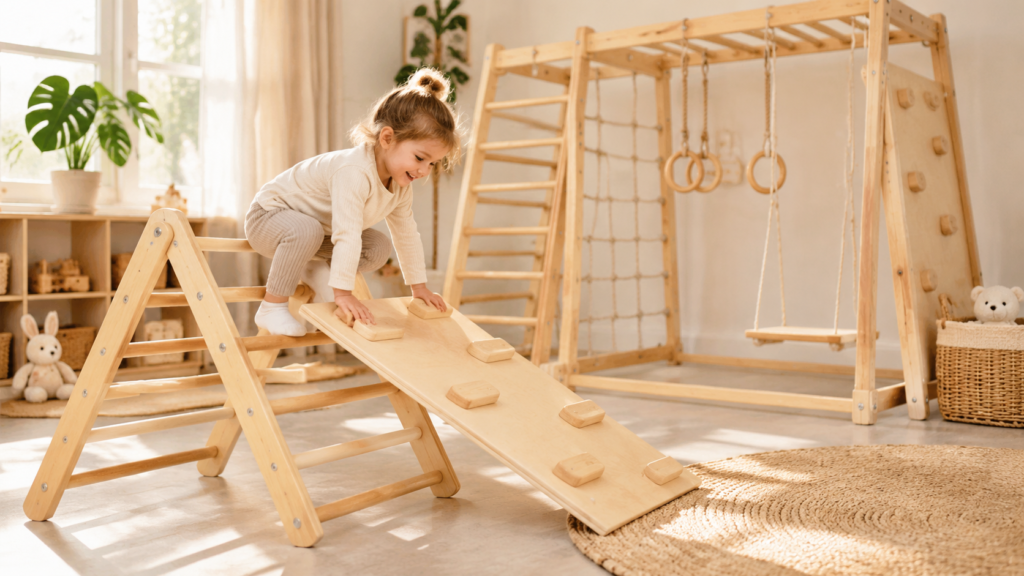
Learning doesn’t happen only at a table.
Movement is an important part of early childhood exploration. Climbing, balancing, crawling, and stretching give children opportunities to understand their bodies and surroundings.
This is where Montessori-inspired climbing equipment can become a valuable part of a home play environment.
Some popular options include:
Wooden Pikler Triangles
Children can explore climbing at their own pace while practicing balance and coordination.
저희의 Wooden Pikler Triangles and Climbing Ramps.
Indoor Wooden Climbing Frames
Multifunctional climbing frames can combine ladders, slides, climbing walls, and other play accessories.
저희의 Wooden Climbing Frames and Play Gyms.
Balance Equipment
Balance boards and wooden balance beams provide additional opportunities for movement and physical challenges.
The American Montessori Society also highlights the importance of hands-on experiences and meaningful movement in early childhood learning.
Read more about Montessori Early Childhood Programs.
Always select equipment appropriate for the child’s age and abilities. Follow installation instructions and provide active adult supervision during climbing activities.
4. Make Everyday Activities Part of Learning
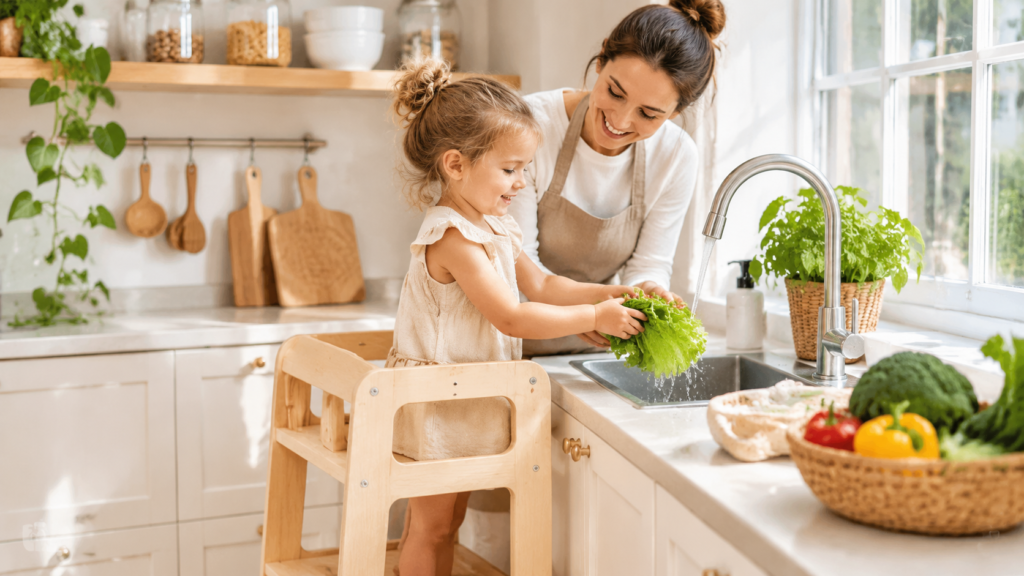
Some of the best learning opportunities happen during ordinary family routines.
Cooking, organizing, cleaning, and preparing simple meals can help children develop practical life skills.
For example, a learning tower can allow a toddler to participate in supervised kitchen activities at a suitable height.
Children may enjoy:
- Washing vegetables with adult assistance.
- Mixing ingredients in a bowl.
- Putting away lightweight kitchen items.
- Helping organize their own belongings.
These activities encourage participation, coordination, and a sense of responsibility.
저희의 Wooden Learning Towers and Kitchen Helpers.
Remember that kitchen activities require close adult supervision, especially around hot surfaces, sharp objects, and electrical appliances.
5. Choose Simple Toys That Encourage Hands-On Learning
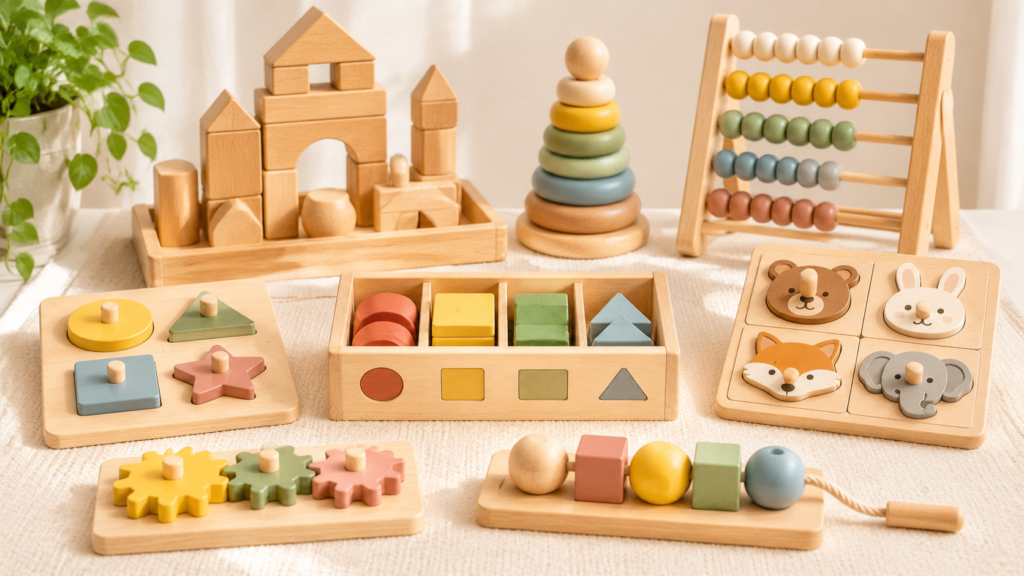
Children don’t always need complicated electronic toys to stay interested.
Simple wooden learning materials can provide opportunities for exploration, repetition, and creativity.
Consider introducing:
Sorting and Matching Toys
These activities encourage children to recognize shapes, colors, sizes, and patterns.
Wooden Building Blocks
Stacking and arranging blocks introduces basic ideas about balance, space, and construction.
Balance and Coordination Toys
Balance boards and wooden activity equipment provide opportunities for physical exploration.
Creative and Pretend Play Toys
Pretend kitchens, wooden accessories, and imaginative play sets allow children to create their own stories and activities.
저희의 Montessori Wooden Toys and Balance Collection.
The most important consideration is not how many toys children have, but whether those toys offer meaningful opportunities to explore.
6. Choose Children’s Furniture That Supports Independence
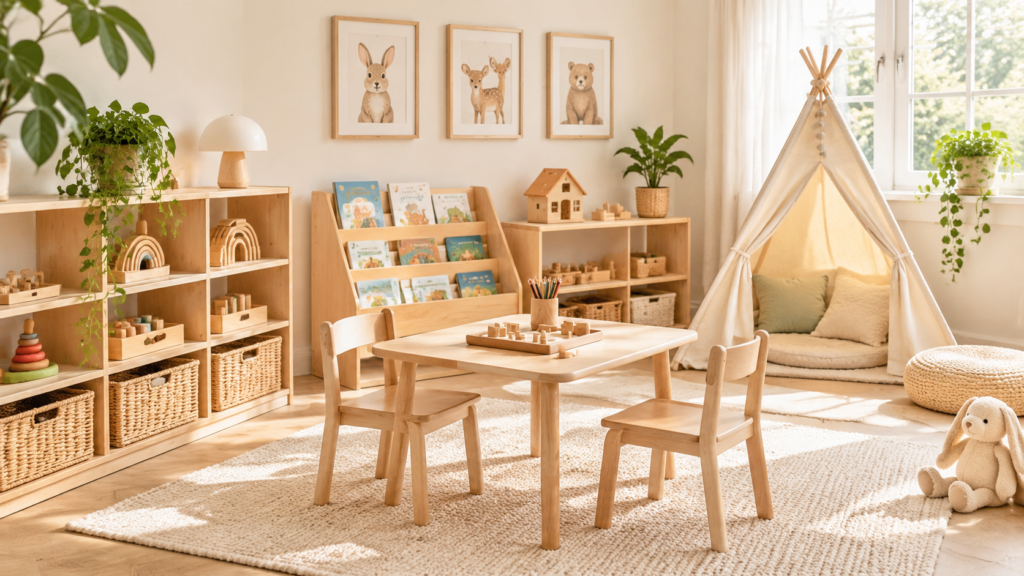
Furniture plays an important role in creating a child-friendly environment.
When children have access to furniture designed around their size and everyday needs, they can participate more comfortably in different activities.
Useful options include:
- Child-sized wooden tables and chairs.
- Low bookshelves and book displays.
- Accessible toy storage.
- Comfortable reading and activity furniture.
When choosing wooden children’s furniture, consider the dimensions, stability, surface finishing, rounded edges, and suitability for the intended age group.
Good design should balance functionality, comfort, and safety.
저희의 Wooden Kids Furniture Collection.
A Few Tips for Parents Starting Montessori at Home
You don’t need to introduce everything at once.
Here are a few simple suggestions:
- Start with one organized play or reading area.
- Offer a small selection of activities instead of too many toys.
- Encourage children to participate in everyday routines.
- Allow enough time for children to try things independently.
- Observe their interests and adjust the environment as they grow.
Every child develops at a different pace. Patience, encouragement, and a supportive environment matter more than having a perfect Montessori room.
마무리 말
Montessori education reminds us that children are not simply waiting to be taught. They are naturally curious learners who benefit from opportunities to explore, practice, and discover.
A thoughtfully prepared home environment can make everyday moments more meaningful.
At CICIWOOD, we believe wooden products can help create warm, functional spaces where children can play, move, explore, and grow.
From wooden climbing frames and Pikler triangles to learning towers, Montessori-inspired toys, and children’s furniture, we offer a diverse range of wooden products for global B2B partners.
We welcome retailers, distributors, importers, and private-label brands interested in developing wooden children’s product collections.
CICIWOOD — Play. Learn. Grow Naturally.
Visit CICIWOOD to explore our collections or contact our team to discuss OEM & ODM cooperation.
자주 묻는 질문
1. What is the main goal of Montessori education?
Montessori education aims to support children’s natural development through independence, hands-on learning, exploration, and a prepared environment.
2. Can I practice Montessori at home?
Yes. Parents can introduce Montessori-inspired ideas through accessible furniture, organized learning spaces, practical daily activities, and opportunities for independent play.
3. Are wooden toys necessary for Montessori education?
No. Montessori education does not require all toys to be wooden. The focus is on purposeful activities, hands-on exploration, and meaningful learning experiences.
4. What wooden products are suitable for a Montessori-inspired home?
Popular choices include Pikler triangles, wooden climbing frames, learning towers, balance equipment, low bookshelves, and child-sized tables and chairs.
5. At what age can children start Montessori-inspired activities?
Montessori principles can be adapted from infancy through childhood. Activities and equipment should always be appropriate for the child’s developmental stage and abilities.