




How to Choose the Right Indoor Climbing Frame for Toddlers
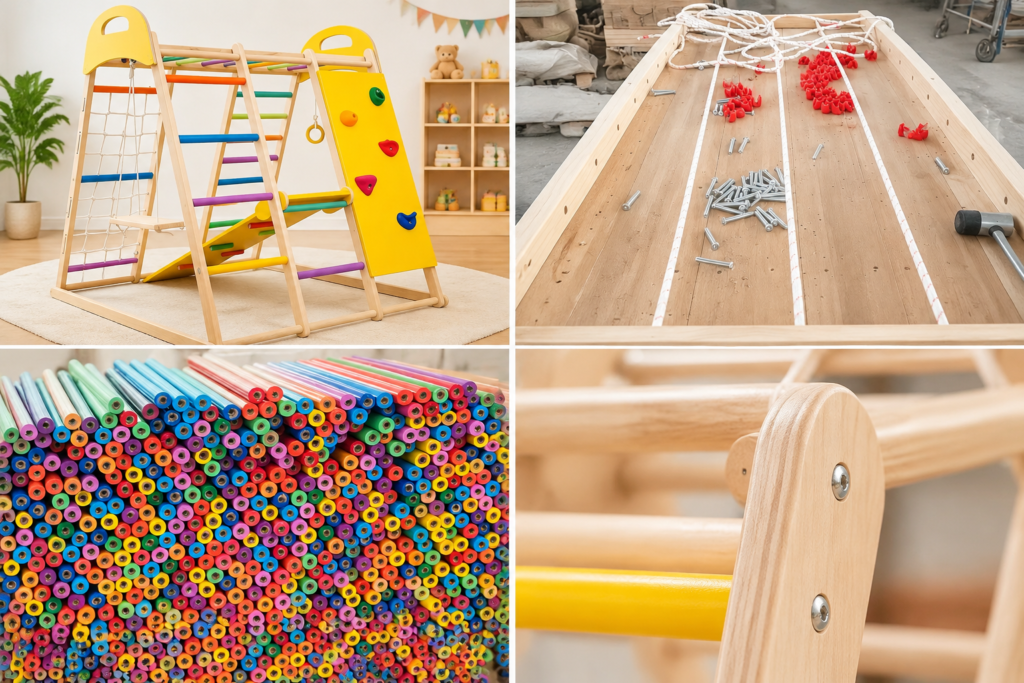
Choosing the right indoor climbing frame for toddlers is a big decision for parents, retailers, and children’s product distributors. A well-suited climbing frame gives kids room to move, explore, and play actively indoors.
That said, not every climbing frame works for every age group. Product dimensions, climbing features, materials, and structural design all need careful thought.
For retailers and wholesalers, understanding these differences also helps build a more competitive wooden play equipment collection.
This guide walks through what to consider when choosing an indoor climbing frame for toddlers and how to select products for different age groups.
1. Choose the Right Climbing Frame for Different Age Groups
Children develop different physical abilities as they grow. Their climbing equipment should match the manufacturer’s recommended age range and the child’s individual development.
Indoor Climbing Frames for Children Aged 1–2
Younger toddlers are just beginning to explore climbing and movement.
When selecting equipment for this age group, consider:
- Low climbing heights.
- Stable and well-supported structures.
- Easy-to-grip wooden bars.
- Smooth, carefully finished surfaces.
- Simple climbing configurations.
Compact Pikler triangles and low climbing arches may be suitable options when designed and approved for the intended age group.
Indoor Climbing Frames for Children Aged 2–3
Children in this age group are often becoming more confident in climbing, balancing, and exploring different movements.
Suitable product options may include:
- Wooden climbing triangles.
- Climbing ramps with appropriate configurations.
- Wooden climbing arches.
- Climbing frames with additional play accessories.
Retailers can consider offering different combinations to provide more choices for families.
Indoor Climbing Frames for Children Aged 3–6
Older preschool children may enjoy more challenging play configurations.
Depending on the product’s design and approved age range, options may include:
- Larger wooden climbing frames.
- Double-sided climbing ramps.
- Rope climbing accessories.
- Multi-functional indoor play equipment.
- Combination climbing structures.
Always follow the manufacturer’s age recommendations, weight limits, and installation instructions.
2. Pay Attention to Materials and Construction
Material quality is one of the most important factors when choosing an indoor climbing frame for toddlers.
Wooden climbing frames are popular because of their natural appearance and compatibility with many home interiors.
Common materials include pine, beech, and birch plywood.
When evaluating a wooden climbing frame, buyers should consider:
Wood Quality
Check the wood species, material specifications, and consistency between production batches.
Surface Finishing
Look for smooth surfaces, carefully rounded edges, and properly finished corners.
Structural Connections
Check how climbing bars, side panels, and accessories are connected.
Hardware Quality
Screws, bolts, and other fasteners should be appropriate for the product design and securely installed.
A well-designed product should combine suitable materials with careful manufacturing and quality inspection.
3. Consider Different Climbing Features
Different climbing accessories can create different play experiences.
Before selecting a product, consider which features are most suitable for your target customers.
Pikler Triangle
A Pikler triangle is a popular wooden climbing structure for indoor play.
Its relatively compact design makes it suitable for many home play areas, depending on the model and available space.
Climbing Ramp
A climbing ramp can provide additional climbing and sliding options.
Some models feature different surfaces on each side, offering more flexibility in play configurations.
Wooden Climbing Arch
A wooden climbing arch can be used in different play arrangements, depending on its design.
It can also complement other wooden climbing equipment.
Multi-Functional Climbing Frames
Larger climbing frames may combine several features, such as climbing bars, rope nets, ramps, and swings.
For wholesalers and retailers, multi-functional products can help expand a product range and offer more choices to customers.
Make sure all accessories are designed for the specific model and have been checked for compatibility.
4. Check Product Safety and Quality Requirements
Safety should always be a priority when selecting indoor climbing equipment for children.
Before purchasing, buyers should ask manufacturers about:
- Applicable product safety testing.
- Material and coating information.
- Structural inspection procedures.
- Product weight limits.
- Assembly instructions.
- Warning labels and product documentation.
For products sold in the United States, buyers can consult the U.S. Consumer Product Safety Commission (CPSC) for relevant product safety guidance.
Official resource: CPSC Toy Safety Guidance
The applicable requirements depend on the product’s classification and intended use. Buyers should verify the requirements for their specific products and destination markets.
5. Consider Space, Storage, and Assembly
An indoor climbing frame should fit comfortably within the intended play area.
Before purchasing, check:
- Overall product dimensions.
- Required surrounding clearance.
- Folded dimensions, if applicable.
- Product weight.
- Assembly requirements.
- Storage and packaging dimensions.
For retailers and distributors, accurate product specifications also help customers make informed purchasing decisions.
Clear assembly instructions and properly organized hardware accessories can make the installation process easier.
6. What Should Wholesalers Look for in a Supplier?
For importers and distributors, choosing the right indoor climbing frame is only part of the purchasing process. Finding a reliable supplier is equally important.
Before placing a wholesale order, consider the following:
Manufacturing Experience
Understand the supplier’s production capabilities and experience with wooden play equipment.
उत्पाद श्रृंखला
Check whether the supplier offers different climbing frame models, accessories, and configurations.
OEM and ODM Services
Ask about custom colors, product configurations, branding, and packaging options.
Quality Control
Understand how materials, production processes, and finished products are inspected.
Export Support
Confirm product specifications, packaging details, lead times, and required documentation before ordering.
A reliable supplier should communicate clearly and provide accurate product information throughout the purchasing process.
7. Why Choose CICIWOOD?
CICIWOOD focuses on wooden indoor climbing frames, Pikler triangle sets, Montessori-inspired play products, and children’s wooden furniture.
We work with international retailers, importers, wholesalers, and distributors looking for wooden play equipment and customized product solutions.
Our services include:
- Wooden climbing frame product selection.
- OEM and ODM customization.
- Custom colors and product configurations.
- Private-label branding and packaging.
- Wholesale order support.
Whether you are developing a new children’s product collection or expanding an existing range, CICIWOOD is ready to discuss your requirements.
Explore our Pikler climbing triangle with slide, net, and rib ladder to discover one of our multi-functional climbing frame designs.
You can also learn more about CICIWOOD and our company.
अक्सर पूछे जाने वाले प्रश्न
What age is suitable for an indoor climbing frame?
The suitable age depends on the product’s design and manufacturer’s recommendations. Different models are designed for different developmental stages. Always check the specified age range before use.
Are wooden climbing frames suitable for small homes?
Some compact and foldable models are designed for smaller indoor spaces. Buyers should check the assembled and folded dimensions before purchasing.
What wood is commonly used for indoor climbing frames?
Pine, beech, and birch plywood are commonly used materials. Their suitability depends on the product design, construction, and manufacturing quality.
Can indoor climbing frames be customized?
Many manufacturers offer OEM and ODM services, including custom colors, configurations, logos, and packaging. Available options depend on the supplier’s capabilities and order requirements.
What should wholesalers check before ordering?
Wholesalers should review product specifications, materials, safety documentation, packaging, quality control procedures, minimum order quantities, and delivery times.
अंतिम विचार
Choosing the right indoor climbing frame for toddlers takes more than comparing product appearance and prices.
Age suitability, material quality, structural design, climbing features, and safety requirements should all be considered.
For retailers, importers, and distributors, working with a reliable supplier can also make product development and wholesale purchasing more efficient.
At CICIWOOD, we welcome inquiries from businesses interested in wooden climbing frames, Montessori-inspired play equipment, and OEM/ODM cooperation.
Contact CICIWOOD to explore our wooden play equipment collection and discuss your wholesale requirements.