

















7 Mistakes to Avoid When Buying Montessori Wooden Toys & Furniture

Montessori wooden toys and children’s furniture have become increasingly popular among families, Montessori-inspired classrooms, early childhood centers, and retailers.
From wooden Pikler triangles and climbing frames to learning towers, balance boards, and educational puzzles, these products give children room to explore with their hands, move their bodies, and play independently.
But not every wooden product is created equal.
Two products can look almost identical in online photos while differing considerably in materials, construction, surface finishing, safety documentation, and long-term usability.
For parents, choosing the wrong product can lead to disappointment and potential safety concerns. For importers and distributors, poor purchasing decisions can also result in customer complaints, returns, and unexpected costs.
Before placing your next order, here are seven common mistakes worth avoiding.
1. Choosing Montessori Wooden Toys Based on Appearance Alone
A beautiful product photo doesn’t always tell the full story.
Natural wood colors, attractive packaging, and minimalist designs can make almost any wooden toy look appealing.
But appearance alone can’t tell you whether a product is well constructed.
When comparing Montessori wooden toys, always consider materials, construction quality, and practical usability rather than appearance alone.
What to check before buying:
- Are the wooden surfaces smooth and properly finished?
- Are there visible cracks, splinters, or rough edges?
- Are all components securely attached?
- Does the product have a stable, well-designed structure?
- Does the supplier provide actual product photos and specifications?
For children’s climbing equipment, look closely at the joints, connecting hardware, ladder rungs, and overall structure.
For educational toys, check whether the components fit properly and whether any detachable parts create age-related safety concerns.
Buying tip: Ask for close-up photos and a sample inspection before committing to a large order.
To compare different product designs, explore the CICIWOOD wooden climbing frames and Montessori product collection.
2. Ignoring Wood Materials and Surface Finishing
Not all wooden products use the same materials or finishing methods.
Pine, beech, plywood, and other engineered wood materials have different properties. The right choice depends on the product’s purpose, construction, and intended users.
Solid wood may be preferred for certain structural components, while suitable engineered wood can be practical for panels and other applications.
The key question isn’t simply whether a product uses solid wood.
It’s whether the chosen material is suitable for the product’s design and intended use.
High-quality Montessori wooden toys should have carefully finished surfaces, suitable materials, and construction appropriate for their intended use.
Before purchasing, ask:
- What wood species or board materials are used?
- Is the surface properly sanded?
- What type of coating or finish is applied?
- Are the materials and coatings supported by relevant testing documentation?
- Is the wood suitable for the expected environment and usage conditions?
For buyers interested in responsible sourcing, the Forest Stewardship Council provides guidance on FSC labels and certified supply chains.
Learn more through the Forest Stewardship Council’s official product labeling guide.
Keep in mind that FSC certification concerns responsible sourcing and supply-chain claims. It is not, by itself, proof of toy safety.
3. Overlooking Stability and Structural Details
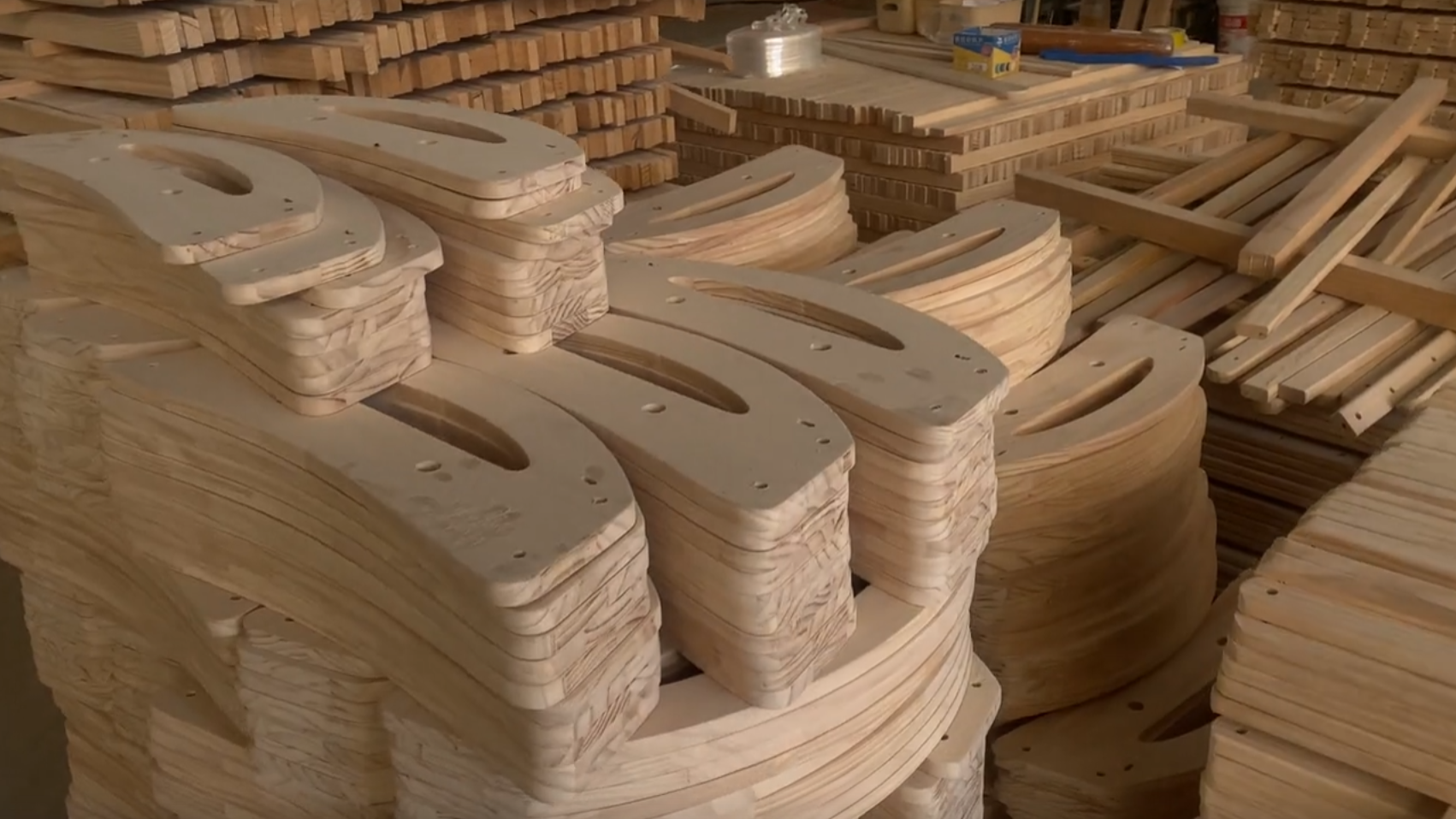
This is particularly important when buying wooden climbing frames, Pikler triangles, learning towers, and children’s furniture.
A product may look strong in a catalog, but its structure and intended use still deserve careful examination.
For wooden climbing equipment, check:
- Frame stability
- Connections and locking mechanisms
- Ladder rung attachment
- Suitable dimensions and spacing
- Manufacturer-specified load limits
- Installation and supervision instructions
For learning towers, check:
- Stability during intended activities
- Platform construction and adjustment mechanisms
- Guarding and openings
- Appropriate age and size recommendations
- Instructions for safe positioning and use
Don’t assume that a heavier product is automatically safer or that a particular wood species guarantees structural strength.
A reliable evaluation should consider the complete design, appropriate testing, and the manufacturer’s instructions.
For more product selection advice, read our B2B Buyer’s Guide to Wooden Indoor Climbing Frames.
4. Assuming Every Wooden Toy Has the Necessary Certifications
One of the biggest mistakes international buyers make is assuming that a certificate mentioned in a product catalog automatically covers every product.
Different countries and product categories have different safety requirements.
例如:
United States
Children’s products subject to applicable U.S. safety rules require appropriate testing and certification. A Children’s Product Certificate (CPC) must identify the relevant requirements and be supported by appropriate testing evidence.
Learn more from the U.S. Consumer Product Safety Commission’s CPC guidance.
European Union
Toys placed on the European Union market must meet applicable toy safety requirements and carry CE marking. Manufacturers must complete the appropriate conformity assessment and provide the required documentation.
Read the European Commission’s toy safety guidance.
Important questions to ask suppliers:
- Which specific product model does the documentation cover?
- What standards and regulations were assessed?
- Which laboratory performed the testing?
- Are the reports relevant to the destination market?
- Are the product labeling and traceability requirements addressed?
A certificate for one wooden toy should not automatically be treated as evidence of compliance for a different model.
For international buyers, checking the applicable safety documentation for Montessori wooden toys is an important part of responsible sourcing.
Buying tip: Always verify the documentation for the exact product and intended market before placing a commercial order.
5. Buying Products That Don’t Match the Child’s Developmental Stage
Montessori-inspired products are often designed to encourage children to explore independently.
But independent exploration doesn’t mean every product is suitable for every age.
A wooden climbing frame, learning tower, or puzzle must be selected according to the child’s developmental abilities, the product’s intended use, and the manufacturer’s age recommendations.
例如:
A toddler learning to develop basic coordination may need different activities from an older child who enjoys more complex climbing challenges.
Likewise, a wooden puzzle containing small detachable pieces may not be appropriate for younger children.
What to avoid:
- Selecting products based only on marketing age ranges
- Ignoring warnings about small parts
- Using climbing equipment without appropriate supervision
- Choosing equipment that exceeds the child’s abilities
- Using products outside their intended purpose
Montessori-inspired play should combine freedom to explore with suitable boundaries and adult guidance.
Learn more about active play in our article: How Wooden Climbing Frames Support Early Childhood Development.
6. Focusing Only on the Lowest Wholesale Price
For importers, retailers, and distributors, a low factory quotation can be attractive.
But the lowest unit price doesn’t always mean the best overall purchasing value.
Other factors can influence the total cost of an order:
- Packaging materials and carton dimensions
- Freight charges and shipping volume
- Product assembly requirements
- Defective or damaged goods
- Replacement parts and after-sales arrangements
- Testing and compliance documentation
- Customization and labeling expenses
Consider two suppliers offering similar wooden climbing frames.
One supplier may offer a lower initial price but require additional packaging, testing, or replacement-part expenses.
Another may provide clearer specifications and a more comprehensive quotation.
Without understanding these details, it’s difficult to compare the actual value of each offer.
Buying tip: Request a quotation that clearly identifies product specifications, quantities, packaging, payment terms, and agreed delivery terms.
7. Choosing a Supplier Without Checking Production and Customization Capabilities
Product photos and attractive prices are only part of the purchasing decision.
For businesses importing Montessori wooden toys and furniture, supplier communication and production capabilities also matter.
Before choosing a manufacturing partner, consider whether the supplier can provide:
- Actual production photos or videos
- Detailed product specifications
- Sample development and confirmation
- Clear production and quality inspection arrangements
- Custom logo and packaging options
- Realistic delivery schedules
- Relevant product compliance documentation
- After-sales communication and support
For private-label brands, product consistency and the ability to develop new designs can be especially important.
At CICIWOOD, we focus on Montessori-inspired wooden children’s products, including climbing frames, Pikler triangles, learning towers, educational toys, children’s furniture, and wooden storage products.
We also supply wooden home, kitchen, pet, and lifestyle products for international buyers.
Our OEM and ODM cooperation options help importers, wholesalers, distributors, and retail brands discuss product specifications, design requirements, packaging, and private-label projects.
Discover more about CICIWOOD and our product supply approach.
A Practical Montessori Wooden Product Buying Checklist
Before confirming your next purchase, use this simple checklist.
| What to Check | Questions to Ask |
|---|---|
| 材料 | What wood and surface finishes are used? |
| Construction | Are joints, edges, and components properly finished? |
| Stability | Is the product suitable for its intended activity? |
| 安全 | Are age guidance and warnings appropriate? |
| Compliance | Are relevant test reports and documents available? |
| 包装 | Is the product adequately protected during shipping? |
| 自定义 | Can sizes, colors, packaging, and branding be adjusted? |
| Supplier | Are specifications, production arrangements, and delivery terms clear? |
Whether you’re purchasing one learning tower for home use or sourcing hundreds of wooden toys for retail, asking the right questions can help you make a better-informed decision.
Final Thoughts: Buy Smart, Not Just Cheap
Choosing Montessori wooden toys and children’s furniture requires more than comparing pictures and prices.
Material suitability, structural details, age appropriateness, relevant safety documentation, and supplier reliability all deserve careful consideration.
For families, the goal is to choose products that support meaningful play and fit children’s developmental needs.
For businesses, the goal is to build a product collection that meets market expectations while reducing avoidable purchasing risks.
At CICIWOOD, we believe thoughtful wooden products begin with careful material choices, practical design, and attention to production details.
We welcome global importers, distributors, wholesalers, and private-label brands interested in Montessori wooden products and a broader range of wooden home and lifestyle products.
探索我们的 wooden product collections or contact CICIWOOD to discuss your next sourcing project.
CICIWOOD — Play. Learn. Grow Naturally.
常见问题解答
1. How can I tell whether Montessori wooden toys are good quality?
Check the materials, finishing, construction, age suitability, and relevant safety documentation. Product photos alone are not enough.
2. Is solid wood always better than plywood?
Not necessarily. Different materials serve different purposes. Material suitability depends on construction, product design, finishing, and intended use.
3. Do all Montessori wooden toys need CE or CPC documentation?
Requirements vary by destination market and product classification. Toys placed on the EU market have applicable CE-marking obligations, while regulated children’s products sold in the United States may require CPC documentation based on applicable rules.
4. What should distributors check before ordering wooden toys wholesale?
Review product specifications, samples, compliance documentation, packaging, unit prices, order quantities, and production arrangements before confirming a bulk order.
5. Can Montessori wooden products be customized for private-label brands?
Many wooden products can be customized in terms of dimensions, colors, finishes, packaging, and branding, depending on the supplier and product design.