




How to Package Wooden Climbing Frames for Safe International Shipping
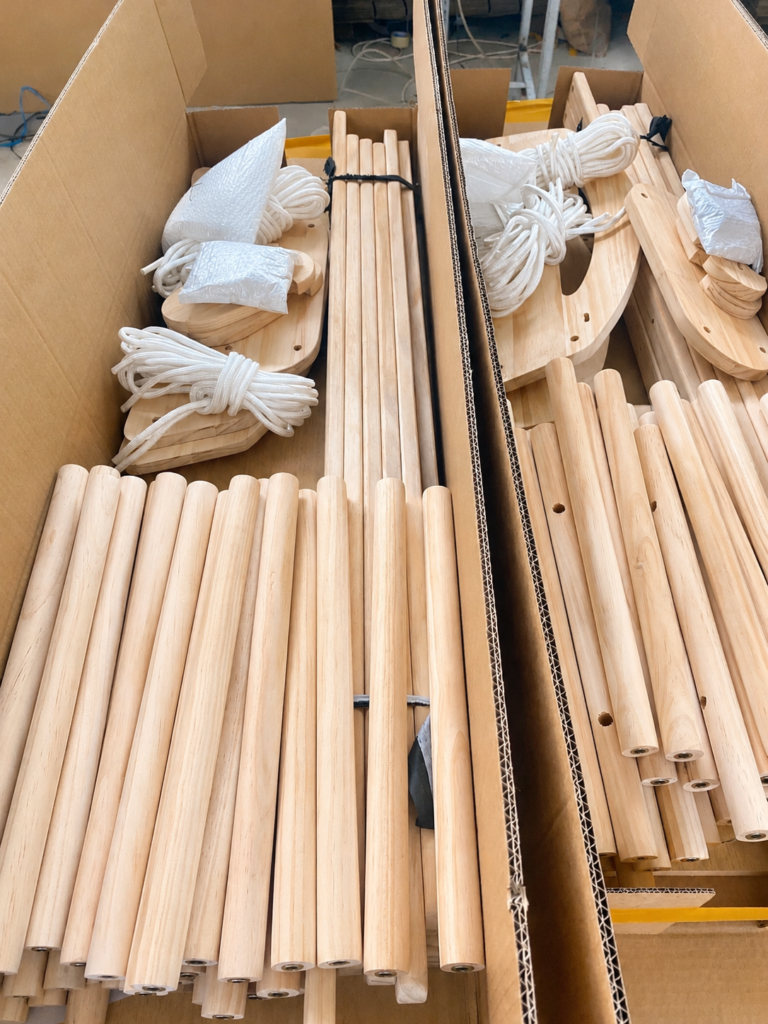
Wooden climbing frame packaging plays an important role in protecting products during international shipping. For importers, distributors and retailers, proper packaging helps prevent scratches, missing accessories and transportation damage.
Choosing reliable wooden climbing frame packaging is essential for keeping wooden panels, climbing bars, ropes and hardware safe throughout transportation. For B2B buyers, packaging requirements should be discussed with the supplier before production is completed.
For B2B buyers, the time to talk about packaging is before production finishes, not the week the container is supposed to leave.
Protect the wood surfaces first
Wooden parts rub against each other in transit. That is unavoidable unless you separate them.
This matters most on painted bars, smooth panels, and anything with a visible natural finish. A scuff on a raw pine panel can sometimes be sanded out. A scuff on a painted rung is a customer complaint.
In practice, suppliers separate panels with protective material, wrap finished faces, reinforce corners and edges, and keep metal hardware from sitting directly against exposed wood. One detail that gets overlooked: the protective material itself should not leave stains or residue. Some cheap foam and film do.
The right method depends on the product structure, the finish, and how far the goods are traveling.
Keep the small parts under control
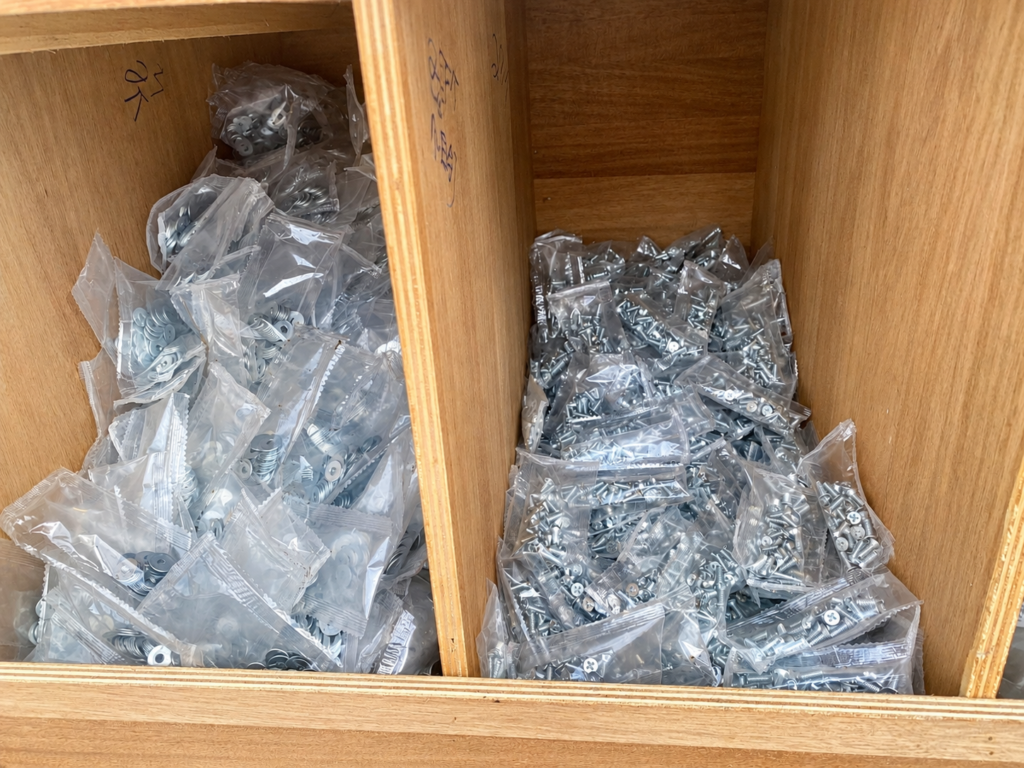
Screws, bolts, nuts, connectors, climbing rings. Every climbing frame ships with a pile of them, and loose hardware inside a carton is how buyers end up short three bolts on a Friday afternoon.
Hardware should be sorted by model, sealed in separate bags, and labeled when similar parts are easy to confuse. Assembly instructions should travel with the components they belong to. Someone should count the accessories against the packing list before the carton is closed.
This is not glamorous work, but a well-organized hardware bag is the difference between a retailer assembling a display unit in twenty minutes and a retailer calling you to complain.
Lay out the inside of the carton deliberately
Boards, bars, ropes, and metal connectors should not just be dropped into the same box.
Cardboard dividers, protective sleeves for long bars, separate compartments for hardware, corner protectors on larger panels, and cushioning around parts that can shift — these are the usual tools. The goal is twofold: stop unnecessary movement, and still use the space efficiently. A carton that is technically protective but half empty costs you money on every shipment.
Choose the outer carton for the real shipping conditions
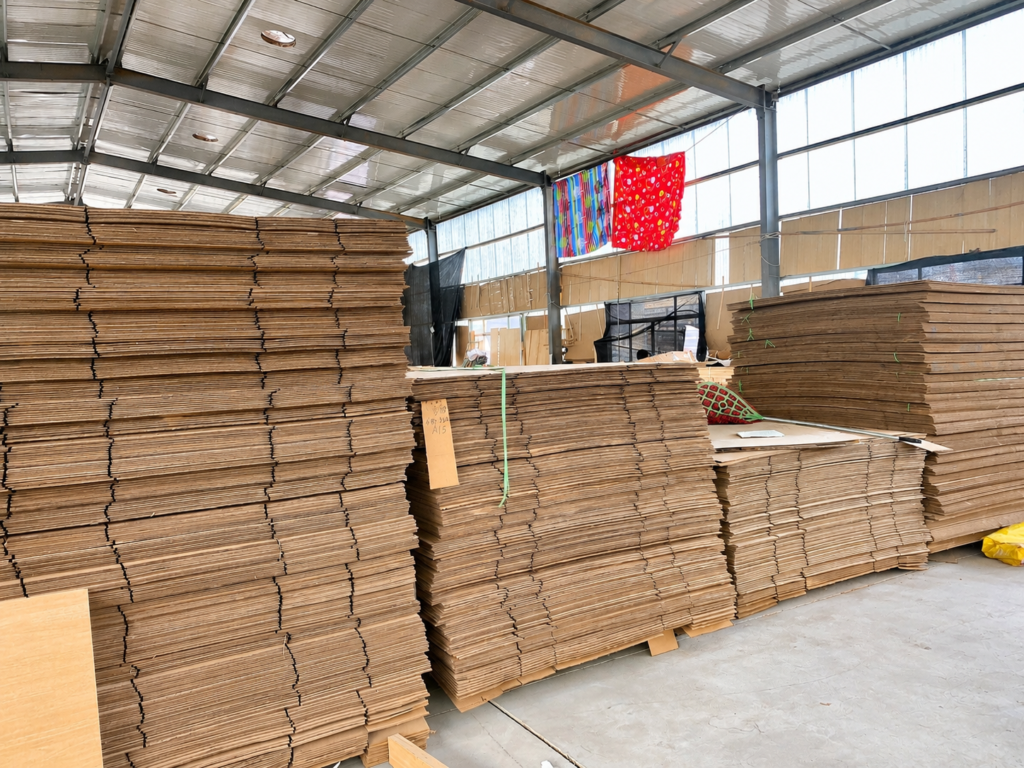
The outer carton is the first thing that meets a forklift, a stack of other cartons, and a warehouse floor.
When you and your supplier pick packaging, work from the actual numbers: product dimensions, total package weight, how the weight is distributed, how high the cartons will be stacked, the shipping method, the distance, and whether the goods move as individual cartons or on pallets. Heavier or larger climbing frame sets often need extra reinforcement.
Test or at least review the packaging under realistic handling conditions. Choosing a carton because it looks sturdy in a photo is not a review.
Get the export packaging rules right
Different destination countries have different packaging and customs requirements, and one point causes more confusion than any other: wood packaging.
Pallets, crates, and other solid-wood packaging materials used in international trade fall under the IPPC’s ISPM 15 standard, which exists to limit the spread of plant pests. USDA APHIS, for example, requires regulated wood packaging entering the United States to meet applicable treatment, debarking, and marking requirements.
Two things are worth keeping straight here. First, importers should confirm whether their pallets, crates, or other wooden packaging need ISPM 15 compliance. Second, the wooden climbing frame itself is not the same thing as the solid-wood material used to support or protect the shipment. They do not automatically fall under the same rules.
Official references:
- USDA APHIS: Import ISPM 15-Compliant Wood Packaging Material
- International Plant Protection Convention (IPPC): Guide to Regulation of Wood Packaging Material
Wooden Climbing Frame Packaging: Confirm Details Before Shipment
Clear package information is what makes receiving and inventory management manageable instead of chaotic.
Before the goods ship, confirm the product model and item number, quantity per carton, carton dimensions, gross and net weight, carton numbering and shipping marks, and that the assembly instructions and accessory lists are included. For mixed-model orders, make sure each carton can be identified on its own.
The packing list should match what actually ships. When it does not, the confusion shows up at receiving, in inventory, and during order distribution.
Put packaging on the final inspection checklist
Packaging belongs in the final quality inspection, not outside it.
Before cartons are sealed, the supplier should verify that the correct components and accessories went in. A workable checklist:
- Wooden surfaces are clean and protected
- No major scratches or visible damage
- Hardware bags are complete and sealed
- Assembly instructions are included
- Carton labels match the product model
- The carton is properly closed and reinforced
- Shipping marks and packing information are correct
On large wholesale orders, ask for photos of the packed products and finished cartons before shipment. It is a cheap safeguard.
Why this matters for wholesale buyers
Packaging is not the last step of production. It decides what condition the product arrives in, how efficiently it ships, how the warehouse handles it, and what the end customer experiences after delivery.
For importers and distributors, well-organized packaging makes receiving, storage, and distribution of wooden climbing frames noticeably easier. When you open a new order discussion, confirm packaging details alongside product specifications, customization, order quantities, and delivery arrangements — not after.
How CICIWOOD works with B2B buyers
CICIWOOD focuses on wooden indoor climbing frames, Pikler triangles, and Montessori-inspired children’s play equipment for international buyers. Different markets and sales channels want different packaging, and we plan for that.
Our B2B support covers wooden climbing frame product selection, OEM and ODM customization, custom logo and packaging discussions, product specification and accessory coordination, and order and export preparation.
Whether you are a retailer, importer, or distributor, raising packaging requirements early keeps the purchasing process organized.
You can explore our wooden climbing frame collections, learn more about our Dịch vụ OEM và ODM, or contact CICIWOOD to discuss your requirements.
Câu hỏi thường gặp
How should wooden climbing frame parts be packed?
Separate and protect wooden panels, bars, ropes, and hardware according to shape and material. Small accessories go into sealed bags to reduce loss.
Why pack hardware separately?
It makes components easier to identify, quantities easier to check, and assembly instructions easier to follow.
Does every wooden climbing frame shipment require ISPM 15 treatment?
No. ISPM 15 applies to regulated solid-wood packaging materials used in international trade, such as certain wooden pallets and crates. It does not automatically apply to the finished climbing frame itself. Always check destination-country requirements.
Can packaging be customized for wholesale orders?
Yes, depending on the product model, order quantity, destination market, and branding requirements.
What information should appear on the carton?
Product model, carton number, quantity, dimensions, weight, and relevant shipping marks. Exact requirements depend on the buyer and destination market.
Final thoughts
A good packaging plan protects more than the product. It keeps transportation smoother, inventory easier to manage, and receiving less of a headache.
For wooden climbing frame importers and distributors, packaging deserves a place in product sourcing from the start. Choosing the right product and planning its packaging together is what makes a wholesale supply process reliable.
Looking for wooden climbing frames for your next collection? Contact CICIWOOD to discuss product options, customization, and wholesale requirements.