



















貴社の市場向けに屋内用クライミングフレームの品揃えを構築する方法
A Practical Guide for Buyers, Distributors, and Private-Label Brands
For distributors, retailers, and private-label brands, building an indoor climbing frame collection is not simply about choosing one attractive product. A strong collection should match your market, offer different price points, support children’s movement, and be easy for customers to understand.
At Ciciwood, we focus on wooden children’s products designed for active play, early learning, and everyday family spaces. Our collection can be developed around indoor climbing frames, reversible ramps, swings, platforms, and Montessori-inspired play furniture.How to Build an Indoor Climbing Frame Collection for Your Market
Why Build a Collection Instead of Selling One Product?
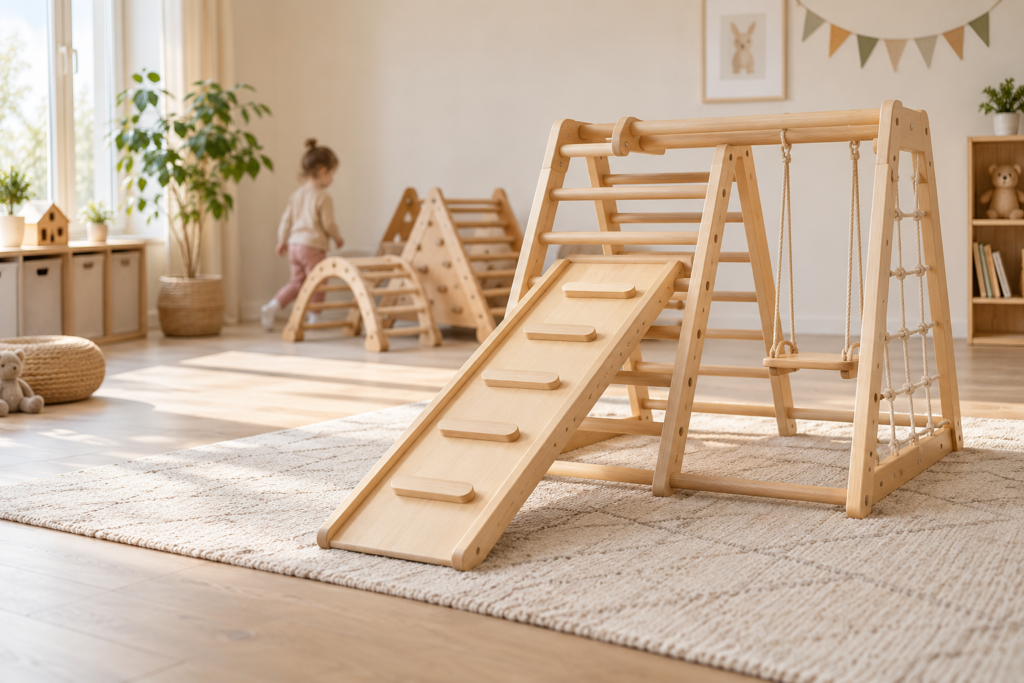
A single climbing frame may attract attention, but a collection gives buyers more ways to serve different customers.
For example, a compact climbing frame can suit small apartments. A larger set with a slide and swing may be more suitable for family homes. A simple natural-wood design can appeal to minimalist interiors, while a rainbow-color collection may attract customers looking for a brighter children’s playroom.
For distributors and retailers, a complete collection can also help create:
- Different price levels for different customer groups
- More choices for online and offline retail channels
- Seasonal promotions without changing the entire product range
- Cross-selling opportunities between climbing frames and children’s furniture
- A more consistent visual identity for a private-label brand
1. Start With the Space Your Customers Have
Space is one of the first factors buyers consider. Before selecting products, think about where the products will be used and sold.
Compact frames are useful for apartments, nurseries, and smaller bedrooms. Larger multi-function frames are better for spacious homes, play cafés, preschools, and indoor activity areas.
Important specifications to compare include:
- Overall assembled dimensions
- Package dimensions and shipping volume
- Product weight and recommended load capacity
- Required safety clearance around the frame
- Assembly method and estimated assembly time
Clear product dimensions also make it easier for your customers to make a confident purchase decision.
2. Offer Different Levels of Functionality
A useful collection normally includes entry, core, and premium options.
Entry-Level Products
Entry-level products can focus on the essential climbing experience. A natural-wood climbing frame with a reversible slide board is simple to understand and suitable for customers who want a practical indoor play product.
Core Collection Products
Core products can combine a climbing frame with a slide, swing, incline board, platform, or rope ladder. These combinations offer more play options while keeping the product suitable for everyday family use.
Premium or Feature-Rich Products
Premium products may include a lookout platform, hanging chair, hammock, or multiple activity stations. They can help retailers create a higher-value product line and give private-label brands a stronger hero product for marketing campaigns.
3. Choose a Consistent Product Style
Customers often judge a collection by its overall appearance before reading the specifications. Consistency in wood tone, color, edge treatment, and accessories helps products look like part of the same brand family.
Natural pine, beech, and other solid-wood options can create different positioning for your market. Natural finishes may suit Scandinavian or Montessori-style interiors. Soft rainbow colors can make the collection more playful and visually appealing.
The key is to decide whether your collection should communicate:
- Natural and minimalist
- Colorful and playful
- Premium and design-led
- Active and multi-functional
Once the direction is clear, the same style can be extended to shelves, tables, chairs, storage, and other children’s furniture.
4. Pay Attention to Safety and Documentation
Safety is a major part of the buying decision for parents, retailers, and institutional customers. Buyers should ask suppliers how the product is sanded, how edges are rounded, how components are connected, and what product documentation is available for the target market.
Depending on the destination market and product type, buyers may need to review documents related to CE, EN71, CPC, FSC, materials, finishes, packaging, and testing requirements. Buyers can also review our Quality & Certificates page. Always confirm which documents apply to the exact product and market before making a compliance claim.
Product safety information should also be presented clearly in product pages, instruction manuals, packaging, and after-sales materials.
5. Consider Packaging and Private Label Early
Packaging should be discussed before the collection is finalized. Buyers need to consider carton size, protective materials, assembly instructions, product labels, barcodes, and shipping marks.
For private-label brands, suppliers may also support custom colors, logos, packaging, manuals, and product combinations. Learn more about our OEM and ODM partnership. Discussing these details early can reduce redesign work and help keep the whole collection consistent.
Why Work With Ciciwood?
Ciciwood supplies wooden children’s products for distributors, retailers, brand owners, and private-label businesses. Our product direction includes indoor climbing frames, Montessori furniture, children’s storage, and active-play products.
We support OEM and ODM cooperation, helping buyers develop products that fit their target market, sales channel, and brand style. From a compact climbing frame to a complete collection with slides, swings, platforms, and complementary furniture, the product range can be planned step by step.
If you are looking for a supplier for your next children’s product line, explore the Ciciwood collection and contact our team about OEM, ODM, private label, and wholesale cooperation.
Final Checklist for Buyers
Before confirming an indoor climbing frame collection, check:
- Does the product range cover different spaces and price levels?
- Are the product dimensions and package details clear?
- Is the design consistent across the collection?
- Are safety documents available for the target market?
- Can the supplier support packaging, colors, and private-label requirements?
- Are assembly, shipping, and after-sales details easy to communicate?
A well-planned collection gives customers more choice and gives your brand more room to grow. With the right product structure and supplier support, indoor active play can become a clear and valuable part of your children’s product range.
Why Build a Collection Instead of Selling One Product?
A single climbing frame may attract attention, but a collection gives buyers more ways to serve different customers.
For example, a compact climbing frame can suit small apartments. A larger set with a slide and swing may be more suitable for family homes. A simple natural-wood design can appeal to minimalist interiors, while a rainbow-color collection may attract customers looking for a brighter children’s playroom.
For distributors and retailers, a complete collection can also help create:
- Different price levels for different customer groups
- More choices for online and offline retail channels
- Seasonal promotions without changing the entire product range
- Cross-selling opportunities between climbing frames and children’s furniture
- A more consistent visual identity for a private-label brand
1. Start With the Space Your Customers Have
Space is one of the first factors buyers consider. Before selecting products, think about where the products will be used and sold.
Compact frames are useful for apartments, nurseries, and smaller bedrooms. Larger multi-function frames are better for spacious homes, play cafés, preschools, and indoor activity areas.
Important specifications to compare include:
- Overall assembled dimensions
- Package dimensions and shipping volume
- Product weight and recommended load capacity
- Required safety clearance around the frame
- Assembly method and estimated assembly time
Clear product dimensions also make it easier for your customers to make a confident purchase decision.
2. Offer Different Levels of Functionality
A useful collection normally includes entry, core, and premium options.
Entry-Level Products
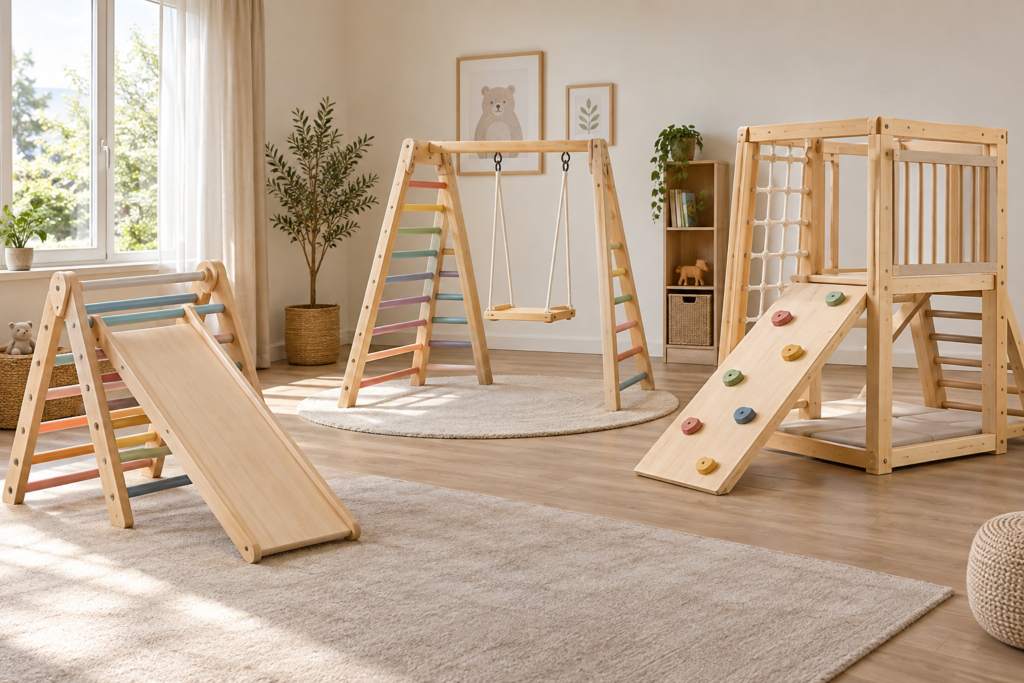
Entry-level products can focus on the essential climbing experience. A natural-wood climbing frame with a reversible slide board is simple to understand and suitable for customers who want a practical indoor play product.
Core Collection Products
Core products can combine a climbing frame with a slide, swing, incline board, platform, or rope ladder. These combinations offer more play options while keeping the product suitable for everyday family use.
Premium or Feature-Rich Products
Premium products may include a lookout platform, hanging chair, hammock, or multiple activity stations. They can help retailers create a higher-value product line and give private-label brands a stronger hero product for marketing campaigns.
3. Choose a Consistent Product Style
Customers often judge a collection by its overall appearance before reading the specifications. Consistency in wood tone, color, edge treatment, and accessories helps products look like part of the same brand family.
Natural pine, beech, and other solid-wood options can create different positioning for your market. Natural finishes may suit Scandinavian or Montessori-style interiors. Soft rainbow colors can make the collection more playful and visually appealing.
The key is to decide whether your collection should communicate:
- Natural and minimalist
- Colorful and playful
- Premium and design-led
- Active and multi-functional
Once the direction is clear, the same style can be extended to shelves, tables, chairs, storage, and other children’s furniture.
4. Pay Attention to Safety and Documentation
Safety is a major part of the buying decision for parents, retailers, and institutional customers. Buyers should ask suppliers how the product is sanded, how edges are rounded, how components are connected, and what product documentation is available for the target market.
Depending on the destination market and product type, buyers may need to review documents related to CE, EN71, CPC, FSC, materials, finishes, packaging, and testing requirements. Buyers can also review our Quality & Certificates page. Always confirm which documents apply to the exact product and market before making a compliance claim.
Product safety information should also be presented clearly in product pages, instruction manuals, packaging, and after-sales materials.
5. Consider Packaging and Private Label Early
Packaging should be discussed before the collection is finalized. Buyers need to consider carton size, protective materials, assembly instructions, product labels, barcodes, and shipping marks.
For private-label brands, suppliers may also support custom colors, logos, packaging, manuals, and product combinations. Learn more about our OEM and ODM partnership. Discussing these details early can reduce redesign work and help keep the whole collection consistent.
Why Work With Ciciwood?
Ciciwood supplies wooden children’s products for distributors, retailers, brand owners, and private-label businesses. Our product direction includes indoor climbing frames, Montessori furniture, children’s storage, and active-play products.
We support OEM and ODM cooperation, helping buyers develop products that fit their target market, sales channel, and brand style. From a compact climbing frame to a complete collection with slides, swings, platforms, and complementary furniture, the product range can be planned step by step.
If you are looking for a supplier for your next children’s product line, explore the Ciciwood collection and contact our team about OEM, ODM, private label, and wholesale cooperation.
Final Checklist for Buyers
Before confirming an indoor climbing frame collection, check:
- Does the product range cover different spaces and price levels?
- Are the product dimensions and package details clear?
- Is the design consistent across the collection?
- Are safety documents available for the target market?
- Can the supplier support packaging, colors, and private-label requirements?
- Are assembly, shipping, and after-sales details easy to communicate?
A well-planned collection gives customers more choice and gives your brand more room to grow. With the right product structure and supplier support, indoor active play can become a clear and valuable part of your children’s product range.