




















Wooden Kids Furniture Display: A Practical Retail Strategy
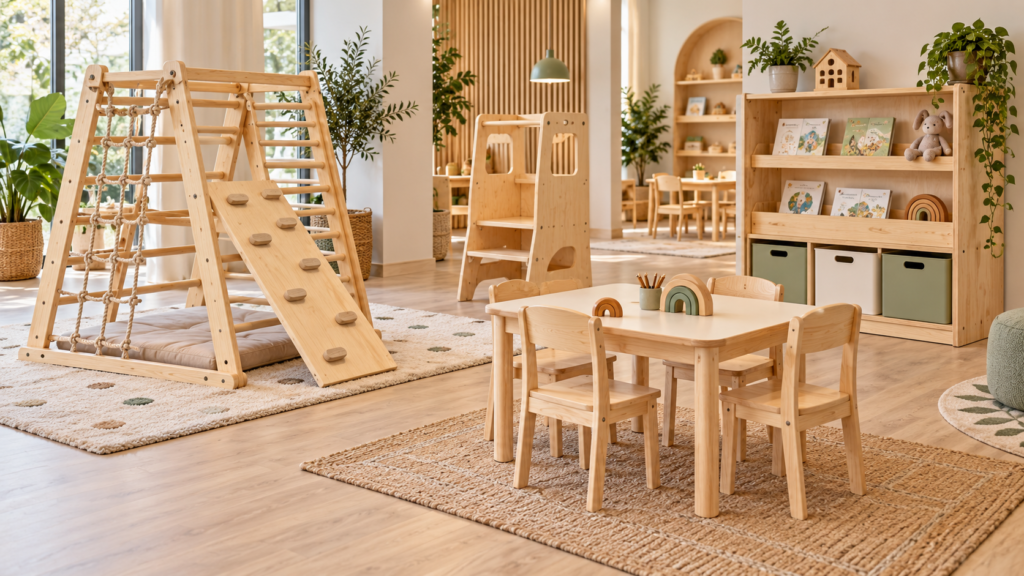
Why Wooden Kids Furniture Display Matters
For retailers, distributors and children’s furniture brands, a wooden kids furniture display should do more than show products. It should help customers understand how each item fits into a real classroom, playroom or child’s bedroom.
A well-planned display can make products easier to compare, highlight practical functions and create a stronger impression of quality.
You can explore Ciciwood’s wooden indoor climbing frame collection for examples of products that can be used in retail displays.
Group Products by Customer Needs
Avoid placing products randomly. Group them according to how customers use them.
A practical retail display may include:
- Indoor climbing frames for active play
- Learning towers for kitchen activities
- Tables and chairs for eating or learning
- Bookshelves and storage furniture
- Nap beds for preschools and daycare centers
This makes the display easier to understand. Parents can quickly find products for home use, while schools and daycare buyers can focus on classroom furniture.
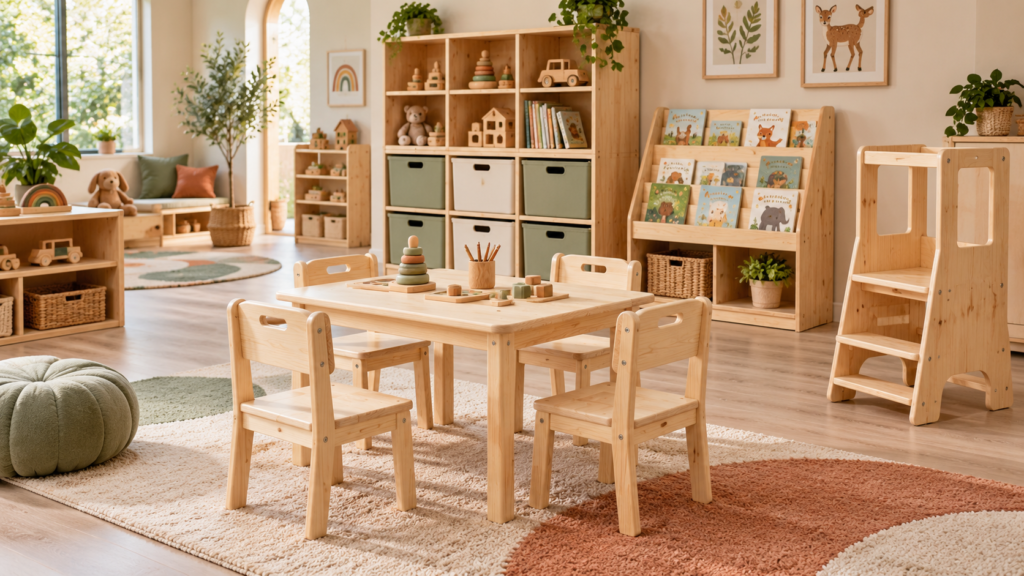
Use Different Display Heights
Children’s furniture should be displayed at different heights.
Place larger climbing frames and storage cabinets at the back of the display area. Put tables, chairs and smaller accessories in the middle. Books, toys and small products can be placed at child-friendly heights.
Different levels create visual balance and allow customers to see more products without making the space feel crowded.
Show Products in Realistic Combinations
Customers often understand furniture better when several products are displayed together.
For example, retailers can create:
- A Montessori playroom with a climbing frame and bookshelf
- A preschool corner with tables, chairs and storage cabinets
- A reading area with a wooden bookshelf and children’s chair
- A toddler activity area with a learning tower and table set
A multifunctional product such as a wooden climbing frame with slide and swing can become the visual focus of a display because it combines several play functions in one structure.
Keep the Display Safe and Easy to Walk Around
A good display must also be practical.
Leave enough space between products so customers can walk around and inspect them. Avoid placing sharp corners, loose accessories or small parts in busy walkways.
For climbing products, show the assembled structure clearly. If possible, display the slide, swing, climbing net and other accessories in their correct positions.
Product safety information should be easy to find. Retailers can also direct buyers to Ciciwood’s quality and certificates page for available product documentation.
Use Natural Materials and Consistent Colors
Wooden children’s furniture usually works best in a warm and natural retail environment.
Use:
- Light wood flooring
- Soft cream or beige walls
- Natural baskets
- Neutral rugs
- Green plants
- Simple wooden decoration
Natural wood products can be displayed together with rainbow-colored products to create contrast. However, too many colors may make the display look disorganized.
A consistent color style helps customers remember the brand and creates a more professional shopping experience.
Add Clear Product Information
Every product should have a short information card.
The card can include:
- Product name
- Main functions
- Recommended age
- Material
- Product dimensions
- Available colors
- Customization options
- QR code or inquiry link
Avoid using long paragraphs. Customers should understand the product within a few seconds.
For B2B buyers, also include packaging dimensions, MOQ, lead time and available compliance documents when appropriate.
Create a Display for Different Markets
The best product combination may vary by market.
For apartment-focused markets, compact climbing frames, folding products and small storage furniture may be more suitable.
For preschools and daycare projects, buyers may prefer tables, chairs, storage cabinets, bookshelves and nap beds.
For premium family markets, multifunctional climbing frames, learning towers and natural wood furniture can create stronger visual appeal.
A flexible supplier can help retailers develop different combinations for different customers. Ciciwood provides OEM and ODM support for product structure, colors, packaging and private-label collections.
Use Photos and Videos Together
A physical display is important, but online content also influences purchasing decisions.
Retailers should photograph:
- Full product views
- Product functions
- Storage details
- Children’s usage scenes
- Material and surface details
- Product combinations
Short videos can show how a slide, swing, climbing net or storage cabinet works in a real environment.
These photos and videos can be used on product pages, social media, catalogs and trade show materials.
Conclusion
A successful wooden kids furniture display should be clear, practical and easy to understand.
Group products by customer needs, use different display heights, create realistic furniture combinations and provide concise product information.
For retailers and distributors, a strong display can improve product understanding and help customers make faster purchasing decisions.
Looking for wooden children’s furniture, climbing frames or private-label solutions? Contact Ciciwood for product catalogs and wholesale support.