




















Best Age to Use a Montessori Climbing Frame for Toddlers: A Parent’s Guide

For many parents, choosing the right time to introduce a Montessori climbing frame can feel confusing.
Some families wonder: “Is my child too young?” Others ask: “Will my toddler actually benefit from a climbing structure, or is it just another toy?”
The truth is that a Montessori climbing frame is not about encouraging children to climb as early as possible. It is about creating a safe environment where children can develop confidence, coordination, independence, and physical skills at their own pace.
When introduced at the right stage and used with proper supervision, a wooden climbing frame can become a valuable part of a toddler’s learning environment — both at home and in daycare settings.
In this guide, we’ll explore the best age to use a Montessori climbing frame, what developmental signs to look for, and how parents and childcare providers can choose the right option for young children.
【Image Suggestion: A bright Montessori-style playroom with a toddler exploring a wooden climbing frame while a parent watches nearby】
What Is a Montessori Climbing Frame?
A Montessori climbing frame is a child-sized wooden play structure inspired by Montessori education principles.
Unlike traditional playground equipment designed mainly for entertainment, Montessori climbing structures focus on child-led movement and exploration.
They allow toddlers to practice physical skills naturally through activities such as:
- Climbing up and down
- Pulling themselves upward
- Balancing their body weight
- Crawling through spaces
- Reaching and stretching
- Developing problem-solving skills
The goal is not to make children perform difficult movements. Instead, it gives them opportunities to explore their abilities in a safe and controlled environment.
Many Montessori climbing frames are made from solid wood with smooth surfaces, rounded edges, and toddler-friendly designs. These features help create a warm, natural play space that fits well with modern family homes, preschools, and daycare centers.
What Is the Best Age to Start Using a Montessori Climbing Frame?
The Ideal Starting Age: Around 12 to 18 Months
For most toddlers, the ideal age to begin using a Montessori climbing frame is between 12 and 18 months old.
At this stage, many children are beginning to:
- Walk independently
- Stand with better balance
- Move confidently around their environment
- Show curiosity about climbing and exploring
However, every child develops differently. Age alone should not be the only factor.
A child who is physically ready and interested in climbing may benefit from a climbing frame earlier, while another child may need more time.
The most important question is:
Does your child show signs of readiness?
Development Signs That Show Your Toddler Is Ready
Instead of focusing only on age, parents can look for developmental milestones.
Your child may be ready for a Montessori climbing frame if they can:
Walk Independently
A toddler who can walk steadily usually has better control over balance and body movement.
Walking ability helps children safely approach climbing activities and understand their own movements.
Enjoy Pulling Up and Exploring Heights
Many toddlers naturally begin climbing onto furniture, cushions, or low surfaces.
This curiosity is a normal part of development.
A Montessori climbing frame provides a safer alternative where children can explore climbing behaviors in a designed environment.
Use Both Hands and Feet Together
Climbing requires coordination between the upper and lower body.
Toddlers who enjoy crawling, pushing objects, or climbing stairs with assistance are often developing the skills needed for climbing activities.
Show Independence
Montessori education encourages children to try things independently.
A climbing frame allows toddlers to make choices:
“Should I climb up?”
“Can I reach the next step?”
“How do I get down safely?”
These small decisions help build confidence.
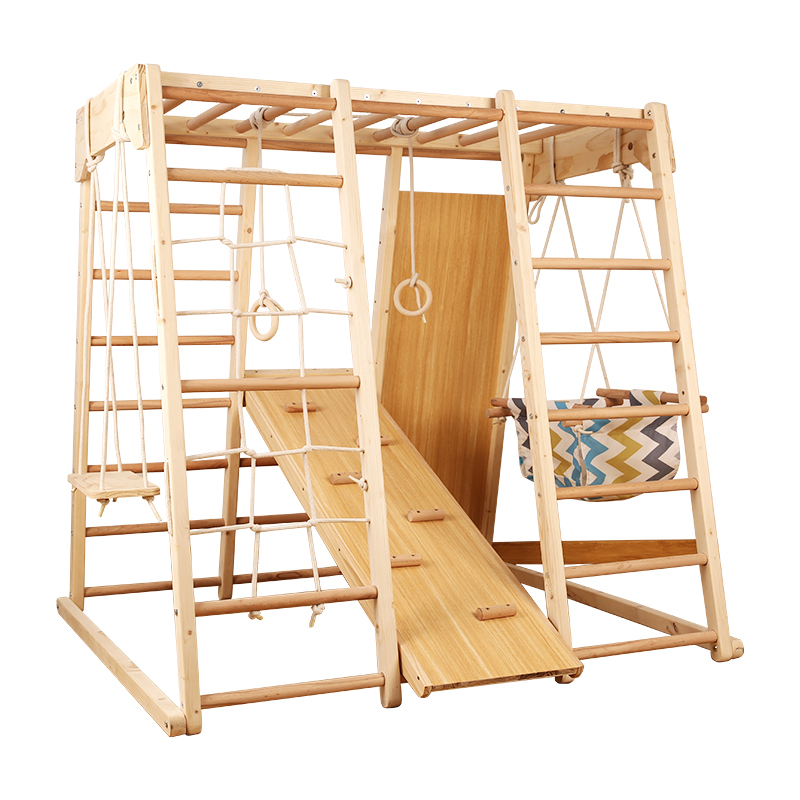
Montessori Climbing Frames for Different Toddler Ages
Different ages have different needs. Choosing the right climbing structure helps children enjoy the experience safely.
6–12 Months: Early Movement Exploration
Some Montessori-inspired climbing products can be introduced during this stage, but usually with very gentle activities.
Babies may use low climbing ramps, soft play elements, or crawling structures rather than traditional climbing frames.
The focus is:
- Crawling
- Reaching
- Pulling up
- Exploring textures
At this age, adult supervision should always be very close.
12–24 Months: The Best Learning Stage
This is often the most popular age range for Montessori climbing frames.
Toddlers between one and two years old are developing rapidly.
They are learning:
- Balance
- Coordination
- Confidence
- Spatial awareness
- Body control
A wooden climbing frame can support these skills through everyday play.
Many parents find that toddlers naturally repeat climbing activities because repetition helps them master new movements.
2–4 Years: Building Confidence and Creativity
Older toddlers and preschoolers can use climbing frames in more creative ways.
They may transform the structure into:
- A pretend playground
- A reading corner
- A fort
- An imaginative adventure space
At this stage, climbing is not only physical exercise. It also supports creativity and independent thinking.
For daycare centers and nurseries, climbing structures can become an important part of active play areas.
【Image Suggestion: Several preschool children playing together on a wooden climbing frame in a daycare classroom】
Benefits of Montessori Climbing Frames for Toddlers
Supports Gross Motor Development
Gross motor skills involve large body movements such as walking, climbing, balancing, and jumping.
Regular climbing activities help toddlers strengthen:
- Legs
- Arms
- Core muscles
- Balance control
These physical abilities support many everyday activities, from running to participating in sports.
Builds Confidence and Independence
One of the biggest benefits of Montessori play is allowing children to experience success through their own efforts.
When a toddler climbs one step higher than before, they learn:
“I can do this.”
That feeling of achievement supports confidence and independence.
Encourages Problem-Solving Skills
Climbing is not just physical.
Children constantly make decisions:
- Where should I place my foot?
- How do I reach the top?
- How can I climb down?
These small challenges encourage thinking and decision-making.
You can learn more about how Montessori learning environments support independence in our guide to [Montessori play principles for toddlers].
Creates Active Indoor Play Opportunities
Many modern families spend more time indoors because of weather, busy schedules, or limited outdoor space.
A compact wooden climbing frame provides an opportunity for active movement inside the home.
For parents living in apartments or smaller houses, choosing a well-designed indoor climbing structure can help create a child-friendly activity area without requiring a large playroom.
How to Choose the Right Montessori Climbing Frame
Choose Safe, Child-Friendly Materials
For toddlers, material quality matters.
Look for:
- Solid wood construction
- Smooth polished surfaces
- Rounded corners
- Strong connections
- Non-toxic finishes
A natural wooden design also fits well with Montessori-inspired home environments.
At ciciwood, our solid wood climbing frames are designed with toddler-friendly details, combining natural materials with functional play features for homes, daycare centers, and early education spaces.
Consider Your Child’s Age and Ability
A younger toddler may need:
- Lower climbing heights
- Wider steps
- Easier climbing paths
Older children may enjoy:
- More challenging climbing options
- Slides
- Climbing nets
- Multiple activity areas
The best climbing frame grows with your child.
Think About Space and Daily Use
Before purchasing, consider:
- Where will the frame be placed?
- How much space is available?
- Will children use it every day?
- Can multiple children play together?
For daycare and nursery buyers, durability and easy maintenance are especially important.
A high-quality wooden climbing frame should handle daily use while remaining safe and comfortable for children.
You may also want to explore our [wooden indoor playground solutions for daycare centers] when planning larger childcare spaces.
Safety Tips When Using a Montessori Climbing Frame
Even the safest climbing equipment requires proper use.
Parents and caregivers should:
Always Supervise Young Children
Toddlers are still learning their physical limits.
Adult supervision helps children explore safely.
Place the Frame on a Stable Surface
Avoid placing climbing equipment on slippery floors.
A soft play mat or suitable safety surface can provide additional protection.
Teach Safe Climbing Habits
Children should learn:
- Climb slowly
- Hold onto surfaces
- Wait for others
- Avoid pushing
Safety rules become part of the learning experience.
Check the Structure Regularly
For home and commercial use, inspect:
- Screws and connections
- Wooden surfaces
- Moving parts
- Overall stability
Regular maintenance helps extend product life.
【Image Suggestion: Parent checking the wooden climbing frame connections in a clean modern home environment】
Why Solid Wood Montessori Climbing Frames Are Popular Among Parents and Educators
Many parents and childcare professionals prefer wooden climbing frames because they offer a combination of beauty, durability, and educational value.
Compared with plastic alternatives, solid wood structures often provide:
- A more natural appearance
- Better integration with home interiors
- Long-lasting durability
- A warm sensory experience
For nurseries and daycare providers, wooden climbing frames can also create an inviting learning environment that encourages active play.
A thoughtfully designed climbing frame is not just a toy — it becomes part of a child’s everyday exploration.
Final Thoughts: When Should Your Toddler Start?
The best age to use a Montessori climbing frame is usually around 12 to 18 months, but readiness matters more than a specific number.
If your toddler can walk independently, enjoys exploring movement, and shows curiosity about climbing, they may be ready to begin.
The purpose of a Montessori climbing frame is not to push children faster. It is to give them a safe space where they can move, explore, and develop confidence naturally.
With the right design, a solid wood climbing frame can become a meaningful part of childhood — supporting physical development, creativity, and independent learning for years.
Frequently Asked Questions
1. Can a 1-year-old use a Montessori climbing frame?
Yes. Many one-year-olds can begin using a Montessori climbing frame if they can walk independently and are comfortable with climbing movements. Always choose a toddler-friendly design and provide supervision.
2. Is a Montessori climbing frame safe for toddlers?
A properly designed climbing frame with smooth wood, rounded edges, and stable construction can be safe for toddlers when used correctly. Adult supervision is always recommended.
3. How long can children use a Montessori climbing frame?
Many high-quality wooden climbing frames can be used from toddler years through preschool age, depending on the design, weight capacity, and child’s development.
4. Are Montessori climbing frames only for Montessori schools?
No. Montessori climbing frames are popular in homes, daycare centers, nurseries, and early childhood education environments because they support active learning and independent play.
5. What skills do toddlers learn from climbing?
Climbing helps children develop balance, coordination, strength, confidence, problem-solving ability, and body awareness.
6. How much space do I need for an indoor climbing frame?
The required space depends on the specific model. Parents should consider both the product size and additional safety space around the climbing area.
7. What materials are best for toddler climbing frames?
Solid wood is a popular choice because it is durable, natural-looking, and suitable for creating a warm Montessori-style environment when properly finished and maintaine
3. How long can children use a Montessori climbing frame?
Many high-quality wooden climbing frames can be used from toddler years through preschool age, depending on the design, weight capacity, and child’s development.
4. Are Montessori climbing frames only for Montessori schools?
No. Montessori climbing frames are popular in homes, daycare centers, nurseries, and early childhood education environments because they support active learning and independent play.
5. What skills do toddlers learn from climbing?
Climbing helps children develop balance, coordination, strength, confidence, problem-solving ability, and body awareness.